
The Insta360 X6 and DJI Osmo 360 are both high-end 360 cameras built around the same core idea: capture everything around you, then choose the framing afterwards. On paper they are surprisingly close, with 8K/50fps 360 video, 120MP 360 photos and large dual 1/1.1-inch sensors. The differences become clearer when you look at battery life, storage, waterproofing, lens repairability, single-lens shooting and overall value.
Affiliate disclosure: Some retailer links on this page are affiliate links. If you buy through them, EFX Finds may earn a commission at no extra cost to you. As an Amazon Associate I earn from qualifying purchases.
Model note: this comparison is for the original DJI Osmo 360, not the newer Osmo 360 II.
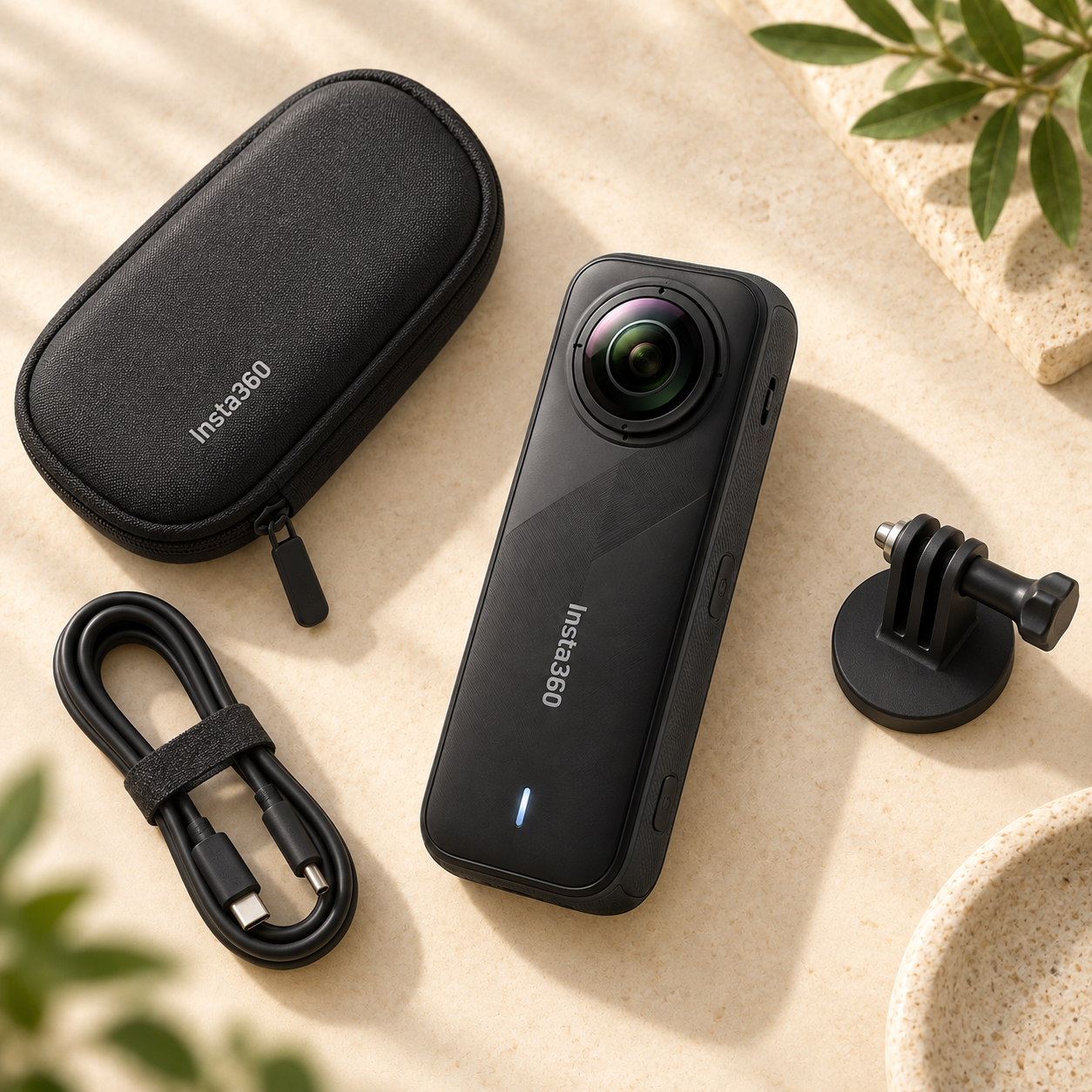
Insta360 X6
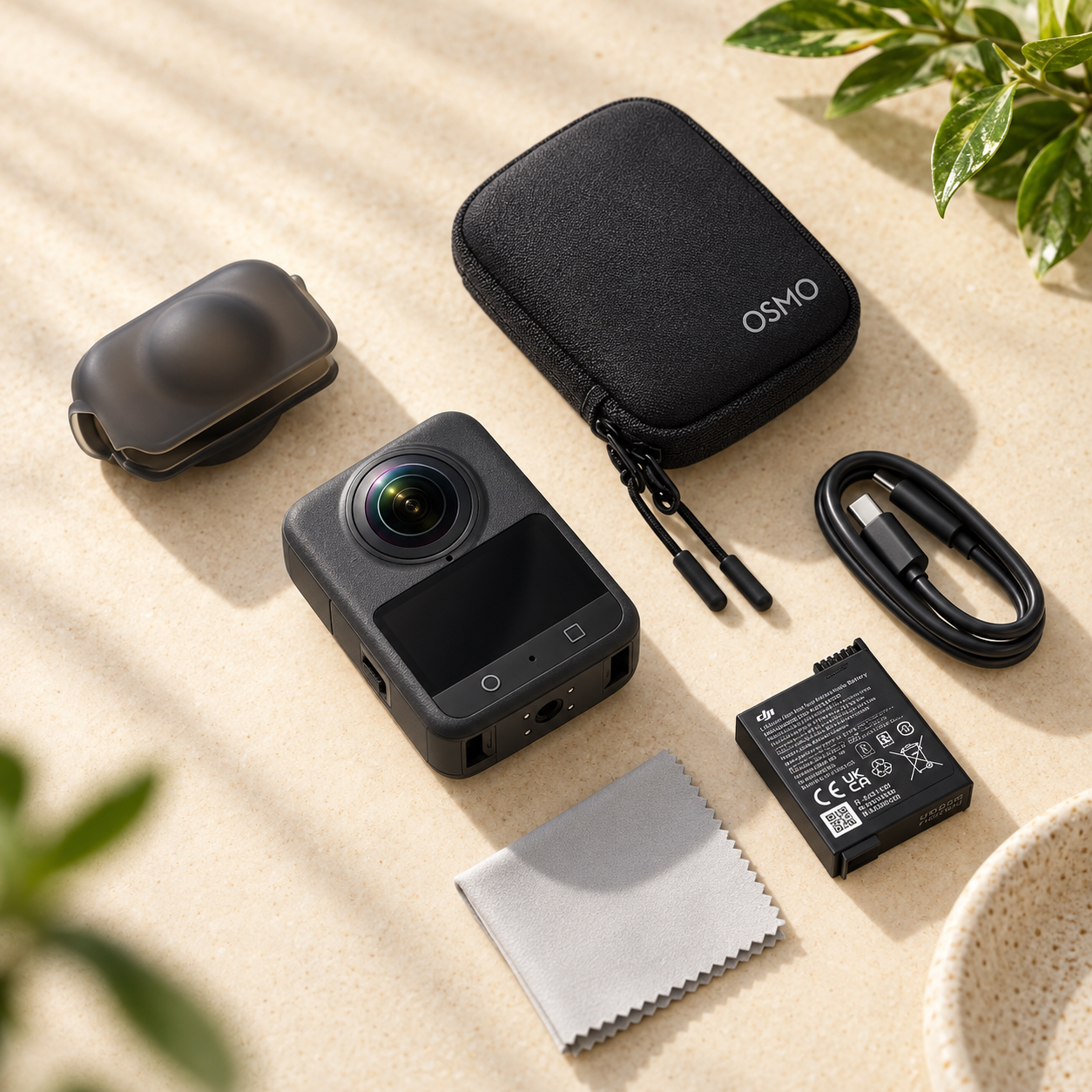
DJI Osmo 360
Quick Verdict
These cameras share many headline specs, so the better choice depends less on resolution and more on how you plan to use it. The Insta360 X6 is the stronger premium option for long recording sessions, water-heavy use and buyers who value user-replaceable lens elements. The DJI Osmo 360 is the stronger value option, with far more built-in storage, a lighter body and useful DJI ecosystem features.
Insta360 X6
Best for premium 360 shooting
The X6 combines 8K/50fps 360 video and 120MP photos with roughly 140 minutes of 8K/30fps recording, waterproofing to 20m without a case and an official user-replaceable lens element system. It is the better fit for demanding travel, action and adventure use where endurance and repairability matter.
Best for: Endurance + Adventure
DJI Osmo 360
Best for value and storage
The Osmo 360 also records up to 8K/50fps and captures 120MP 360 photos, while giving you 105GB of usable built-in storage, a lighter 183g body, 10-bit D-Log M and direct connection to compatible DJI Mic transmitters. It is especially compelling if you want flagship-level core specs without paying for every X6 advantage.
Best for: Value + Storage
Insta360 X6 vs DJI Osmo 360: Key Differences
| Feature | Insta360 X6 | DJI Osmo 360 |
|---|---|---|
| 360 video | Up to 8K/50fps | Up to 8K/50fps |
| 360 photos | Up to 120MP | Up to 120MP |
| Sensors | Dual 1/1.1-inch | Dual 1/1.1-inch square CMOS |
| Pro colour | 10-bit I-Log | 10-bit D-Log M |
| Internal storage | 64GB / about 47GB available | 128GB / about 105GB available |
| 8K/30 battery life | About 140 minutes | Up to 100 minutes |
| Waterproofing | 20m without a case | 10m without a case |
| Weight | About 196g | About 183g |
| Lens element repair | User-replaceable with official repair kit | Lens is not user-replaceable |
| Best for | Endurance, water use, repairability | Value, storage, DJI ecosystem |
Where the Insta360 X6 Wins
- Longer quoted 8K/30fps battery life at about 140 minutes
- Waterproof to 20m without a case
- User-replaceable lens elements with an official repair kit
- 10-bit I-Log recording for more flexible colour grading
- Strong choice for long outdoor, travel and adventure sessions
Where the DJI 360 Wins
- Much more usable built-in storage: 105GB versus about 47GB
- Lighter body at about 183g
- 4K/120fps 170° Boost Video in single-lens mode
- 10-bit D-Log M for colour grading
- Direct connection to compatible DJI Mic transmitters
- Works with DJI Osmo Action quick-release accessories
Video and Image Quality: Closer Than the Specs Suggest
Headline resolution does not separate these two cameras very much. Both can record 360 video at up to 8K/50fps and both can capture 120MP 360 photos. They also both offer 10-bit recording with dedicated log-style colour profiles for creators who want more control in post-production.
The bigger practical difference is how you shoot. DJI gives you a particularly strong single-lens option with 170° Boost Video at up to 4K/120fps, which makes the Osmo 360 useful as both a 360 camera and a conventional ultra-wide action camera. The X6, meanwhile, leans heavily into its 360-first workflow and combines its high-resolution capture with Insta360 features such as PureVideo, I-Log and reframing tools.
If your priority is simply getting the highest headline resolution, there is no obvious winner here. The decision becomes much more about endurance, workflow, storage and the type of shooting you actually do.
Battery, Storage and Durability
This is where the X6 starts to justify its premium positioning. Insta360 quotes about 140 minutes of 8K/30fps recording from the included 2600mAh battery, compared with DJI’s quoted maximum of 100 minutes at the same resolution and frame rate. The X6 is also waterproof to 20m without a case, while the Osmo 360 is rated to 10m.
The X6 also has an important long-term ownership advantage: Insta360 sells an official replacement lens element kit and provides a user replacement and calibration process. DJI states that the original Osmo 360 lens itself cannot be changed by the user, although transparent protective lens covers are available separately.
DJI answers back strongly on storage and portability. The Osmo 360 provides about 105GB of usable built-in storage compared with roughly 47GB on the X6, and its 183g body is slightly lighter than the X6 at about 196g. Both can also use microSD storage.
Which One Should You Buy?
Choose the Insta360 X6 if…
You expect to use your camera heavily outdoors, regularly shoot long sessions, want deeper waterproofing or value the ability to replace a scratched lens element yourself. It is also the natural choice if you already use Insta360 accessories or prefer to keep your shooting and editing workflow inside the Insta360 ecosystem.
Choose the DJI Osmo 360 if…
You want excellent 8K 360 capture without paying for advantages you may not actually use. Its large amount of internal storage, lighter body, strong single-lens Boost Video mode and DJI microphone and quick-release compatibility make it a particularly sensible option for travel, everyday content and buyers already invested in DJI gear.
EFX Verdict: DJI for Value, Insta360 for the Premium Experience
The Insta360 X6 is the more complete adventure-focused camera. Its longer battery life, 20m waterproofing and user-replaceable lens elements are meaningful advantages, especially for people who expect to use a 360 camera hard rather than occasionally.
But the DJI Osmo 360 gets remarkably close on the headline capture specs while offering substantially more internal storage, a lighter body and useful DJI ecosystem features. If the DJI remains significantly cheaper when you are ready to buy, we think it is the smarter value choice for most people.
Choose the X6 if endurance, water use and long-term repairability justify the premium for you. Choose the Osmo 360 if you mainly want excellent 360 footage and would rather put the price difference towards accessories, storage or your next trip.